The Case For Jack Morris
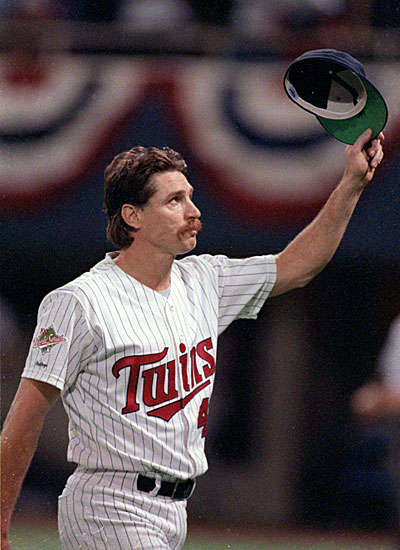 We're going to step into the Way-Back Machine here for a second, so bear with us.
We love, nay worship, the Minnesota Twins. If you couldn't figure that out, then why the hell are you reading a blog titled "Off The Baggie". Oh, I see, you thought it had something to do with pot... Get a job stoner...
Anyway, one of the happiest moments of our childhood back in South Dakota was the 1991 World Series. The world stood still for 7 glorious games that October. Kirby was the man back then. Where we lived, fat people were meant to lay around watching TV, not rob home runs. When he hit that game 6 shot into space, we wept just a little.
All this being said, the most admirable performance of that series wasn't from the rotund one. It was Jack Morris and his game 7 masterpiece. 10 innings, 7 hits, 0 earned runs. As one Twin Cities reporter put it "Morris could have outlasted Methusela".
Normally we're not ones to post someone elses work, but this is just too good. Someone by the name of Gary Zwillinger left this as a comment on one of our posts, and it must be shared. Wherever and whoever you are Gary Zwillinger, you will forever be a friend.
THE CASE FOR JACK MORRIS
INTRODUCTION
In his first year of eligibility for the Baseball Hall of Fame in 2001, Jack Morris received 101 out of a possible 515 votes cast (19.61%). In his second year, Morris received a similar number and percentage (97 votes out of 472 votes cast – 20.55%). His third year bumped that percentage to approximately 23%. Over the last few years, his numbers have risen to 42.1%. In order to be elected, a candidate must receive at least 75% of the votes cast.
The question is why would the man who: (i) won more games than any major league pitcher during the decade of the 1980’s; (ii) is generally credited with having pitched the defining 7th game of a World Series; (iii) whose 254 career wins exceeds the career win totals of Hall of Famers Carl Hubbell, Sandy Koufax, Bob Gibson, Jim Bunning, Hal Newhouser and Bob Lemon, among others, and (iv) was called by Hall of Fame baseball writer Peter Gammons, the “best of his time, especially when it counted. It never dawned on me that he wouldn't be a first-ballot winner”; be on a course to languish among the large group of “good but not worthy” pitchers over the course of a “solid” career.
The answer, as set forth in this presentation, is that the absence of one or two magnificent “career” years or one meteoric statistic has allowed a clearly worthy Hall of Fame career to be obscured.
The purpose of this presentation is to set the record straight and make the case for Jack Morris’ entry into the Hall of Fame.
THE FACTS AND THE ARGUMENT
The game of comparisons among pitchers from different decades is a tricky one. The use of the total number of wins as the basis for either side of an argument (e.g. Morris won 70 less games than Don Sutton but was clearly more dominant and worthy, or Morris won 89 more games than Sandy Koufax but never reached his heights) provides support for Mark Twain’s distrust for statistics. However, a pitcher’s dominance in comparison to the other pitchers of his time, during the bulk and prime of an extended career, must be a valid yardstick for analysis.
Morris’ prime was the 14-year period from 1979-1992 (he pitched only 151 innings before 1979 and only 2 years after 1992). During that period, his 233 wins were not only the most by a major league pitcher, they were shockingly the most by 41 games (Bob Welch was next at 192, 174 for Dave Stieb and 168 for Nolan Ryan).
The purpose of this analysis is not to detract from Nolan Ryan, but it’s hard to ignore that during a 14 year period of what is Ryan’s “second prime” (it is, after all, Ryan’s longevity and strikeout numbers which propelled him into the Hall so overwhelmingly), Morris outwins the near unanimous first rounder by 65 games.
It’s instructive that 14 consecutive years seems to be an accurate yardstick for great pitchers who stake their Cooperstown claim on the strength of their “prime” (we’ll call them the “Prime Pitchers”) as opposed to the group of great pitchers who base their claims on longevity (we’ll call them the “Endurers”).
Step back 10 years from Morris’ prime and look at the great pitchers of the late 60’s and 70’s. In what is the prime of the great Tom Seaver (1969-1982 - remember 1969 is the “Miracle Mets” year when Seaver wins 25), Seaver wins one game less than Morris in his 14 year prime (233 for Morris and 232 for Seaver). The 14-year period from 1961 to 1974 for Bob Gibson shows Gibson winning 242 games, 9 more than Morris. Jim Palmer’s 14 year prime (1969-1982) has him winning 240 games (7 more than Morris). Steve Carlton’s 14-year prime (1969-1982) is the best of that era at 258 wins followed by Gaylord Perry (14-year prime from 1966-1979) at 255 wins. Ferguson Jenkins’ 14 year prime (1967-1980) is next at 251 wins. Other than the somewhat earlier era career of Warren Spahn (the tops at 270 during his 14 year prime from 1947-1960), the only other two post World War II pitchers to win more than Jack Morris in their 14 consecutive year primes are Greg Maddux ( 1987-2000 – 238 wins – 5 more than Morris) and Juan Marichal (1961-1974 – 237 wins - 4 more than Morris). All of the above are Hall of Famers (including the certain future entry of Maddux)
The following Prime Pitchers fall short of Morris’ 233 wins in his 14-year prime:
• Whitey Ford (1953-1966) 225 wins (Hall of Famer)
• Jim Bunning (1957-1970) 221 wins (Hall of Famer)
• Roger Clemens ((1986-1999) 231 wins (Certain Future Hall of Famer)
• Don Drysdale (1956-1969) full career – 209 wins (Hall of Famer)
• Tom Glavine (1987-2000) 208 wins (Maybe Future Hall of Famer)
• Dennis Martinez (1977- 1990) 159 wins (Unlikely Hall of Famer)
• Robin Roberts (1949-1962) 227 wins (Hall of Famer)
• Bob Welch (1979-1992) 192 wins (Unlikely Hall of Famer)
When we jump to the “Endurers” and give each of them the benefit of the doubt by counting only their “best” 14 years as the basis for the comparison (rather than any one 14 year consecutive period) Morris’ case for immediate entry into Cooperstown is only strengthened. The near unanimous first rounder, Nolan Ryan’s best 14 years gives him 10 less wins than Morris’ prime (Morris’ 233 wins to Ryan’s 223 wins). Bert Blyleven’s so far unsuccessful attempt is based on longevity and strikeouts. Blyleven’s best 14 years are the same as Ryan’s – 223 wins and 10 less than Morris’ prime. Other relevant Endurers and their best 14 years are as follows:
• Orel Hersheiser ---196 wins ---37 less than Morris’ Prime (Unlikely Hall of Famer)
• Bob Feller ---242 wins ---9 more than Morris’ Prime (Hall of Famer)
• Catfish Hunter ---222 wins --- 11 less than Morris’ Prime (Hall of Famer)
• Jim Kaat --- 228 wins --- 5 less than Morris’ Prime (Maybe Future Hall of Famer)
• Jimmy Key ---185 wins --- 48 less than Morris’ Prime (Unlikely Hall of Famer)
• Phil Niekro --- 236 wins --- 3 more than Morris’ Prime (Hall of Famer)
• Don Sutton ---228 wins --- 5 less than Morris’ Prime (Hall of Famer)
• Early Wynn --- 237 wins --- 4 more than Morris’ Prime (Hall of Famer)
• David Cone --- 182 wins – 51 less than Morris’ Prime (Unlikely Hall of Famer)
Whether it’s the “Prime Pitcher” analysis or the “Endurer” analysis, the answer is the same. The only pitchers greater than Morris are the consensus Hall of Famers: Seaver, Palmer, Gibson, Carlton, Jenkins, Perry, Marichal, Maddux (when he retires), Feller, Niekro, Spahn and Wynn. The others who have made it as well as those who haven’t are not at his level and the numbers bear that out.
On a more typical time analysis, the winners of the most games in every decade in the 20th century are all existing. or in the singular case of the 1990's and Greg Maddux, future Hall of Famers except for one; Jack Morris. The 00’s found Grover Cleveland Alexander as the pitcher with the most wins. The 10’s was led by Walter Johnson; the 20’s by Burleigh Grimes; the 30’s by Lefty Grove, and Hal Newhouser was the winningest pitcher in the 40’s. Probably more instructive is the comparison of Morris with the “modern” pitchers. When you make that comparison, Morris is right in the middle of that group and belongs with them in Cooperstown. They are as follows:
1950’s Spahn 3 more wins than the next highest, Robin Roberts
1960’s Marichal 33 more than the next highest, Don Drysdale
1970’s Palmer 8 more than the next 3 highest, Jenkins, Seaver and Carlton
1980’s MORRIS 22 more than next highest, Dave Stieb
1990’s Maddux 12 more than next highest, Tom Glavine
Jack Morris is in the rarified air that Hall of Famers occupy. His absence would be a great injustice.
MORRIS’ RESUME
Morris’ curricula vitae is as follows:
• Greatest 7th game pitching performance in World Series History (Game 7, 1991, 10 IP – 0 ER – 7 hits- Winning Pitcher in 1-0 victory over Braves)
• One of the Innovators of the Split Fingered Fastball
• 1979-1992 – 233 Wins- 41 more than the next highest total and 65 more than Nolan Ryan
• 254 career wins in 527 starts – comparable to Jim Palmer’s 268 career wins in 521 starts (consider the talent of the Orioles teams over Palmer’s career against that of Morris’ Tigers)
• 3 seasons with 20 wins or more – compared with Don Sutton’s 1 season- Jim Bunning’s 1 season
• 5 seasons with 17 wins or more (but less than 20 wins). Ryan had 3 - 17+ seasons
• 3824 innings pitched – 6X 250+ innings – 11X 200+ innings
• Pitched on 4 World Champions – Ace of 3 of those teams with a World Series record of 4 wins – 2 losses and a 2.96 ERA in the World Series
• Acknowledged big time clutch pressure pitcher
• Unquestioned Pitcher of the 1980’s
• Pitched a No-Hitter
• Started 14 consecutive Opening Day games during his career, tying him with the great Walter Johnson for most consecutive Opening Day games
• Acknowledged number one pitcher on 1984 Detroit Tigers – one
of baseball’s all time great teams
Absent from the c.v. is any Cy Young Award. He never led the league in ERA. He led
the league in strikeouts only once, innings pitched only once and games won twice.
CONCLUSION
The picture is clear. While he never dominated for one year in a Koufax or Gibson mode, he did, perhaps more importantly, dominate his era with a magnitude that is the equivalent, at least, of the greatest modern day pitchers. He was the clutch pitcher of his generation and his success in the World Series venue bears that out. When you stack up the numbers, Morris is outperformed only by the most “elite” pitchers of the modern day. Other than those most elite (Seaver, Palmer, Gibson, Carlton, Perry, Spahn, Maddux, Jenkins) existing Hall of Famers fall consistently short of his greatness.
Morris is a Hall of Famer, plain and simple. The absence of a few stellar years or a Ryan like strikeout ability has to be the answer for the results of his first 2 years on the Hall of Fame ballot. BBWAA writers should take note and correct this mistake. Morris may not be the media friendly quote machine of someone like Palmer, but his dominance of his era over an extended career means he belongs there beside Palmer, Seaver, Gibson and Carlton in Cooperstown.
**Update: While we really love the debate that this article has generated, we have to mention once more that we did not write this. If anyone who reads this knows Gary Zwillinger, please hook us up with some contact information so we can get him the credit he deserves for such intelligent work. Whether you agree with him or not, you have to admit it's pretty damn well written...
**Another Update: This post has spawned the most intelligent debate we've ever had here. If you don't believe us, just look at the comments. Not single use of the word "Poop" or any sentence that threatens our lives because of our hatred for Phil Mickelson.
posted by Spirit of Jack Morris @ 7:34 PM
41 comments


41 Comments:
What's missing here, of course, is the number that is (correctly) keeping Jack Morris out of the Hall of Fame: 3.90, as in his career ERA, giving him a career ERA+ of 105. The much-maligned Don Sutton sits at 108; even Nolan Ryan, who's in because he pitched forever and struck out a bunch of guys, is at 112. Morris compares to borderline inductee Catfish Hunter (104) but Catfish has a career ERA of 3.26, which looks a lot better to voters than 3.90 does. And as much as everyone remembers game 7, what's also notable is that Morris' postseason ERA is 3.80, and his record in the postseason overall is 13-13 - fitting for a guy who was so remarkably average.
AL pitchers will always have higher ERAs thanks to the DL. And most playoff starters will have losing records, because the team most likely to not lose four games in its last series is the WS champ, and there can only be one a year (more playoff teams=more teams with overall losing playoff record). Bottom line -- it's the Hall of Fame, not the Hall of ERA, and this guy dominated the 80s. His game seven is the stuff of myth, just like Reggie's 3HR game vs. LAD. (If Reggie hit 390 HRs, you're telling me he didn't deserve to go?) I always hated the Twins, since they absconded from DC, but no matter -- he deserves to go in. And, for that matter, so does Orel Hershiser. If the guy fits in the phrase "he's f***ing [fill in the blank], fer crissakes", he's a Hall of Famer. Works for Reggie, works for Morris. (And BTW, it's the reason Don Sutton should not have been voted in. If the guy fits in the phrase "he's [fill in the blank] f***ing [fill in the blank], fer crissakes", he's not a Hall of Famer.)
Hall of ERA, that's good stuff. ERA+ happens to remove the inherent bias of higher ERA's in general for AL pitchers (being a function of league ERA), but no matter. Unfortunately for Jack Morris, it isn't so much a "Hall of Fame" (otherwise Steve Garvey would be in) as it is a "Hall of Being Really Good At Playing Baseball", which is a qualification for induction that Mr. Morris fails to achieve. Orel Hershiser is also a terrible choice, but that's a whole other can of worms.
All that "dominated the 80's stuff" is window dressing on the straw house that is Morris' candidacy. First, he didn't dominate the decade, not having won a single Cy Young award during the entire period. Second, even if he had dominated the entire decade, it's just a coincidence that the bulk of his career happened to occur when the third digit in the year never changed. It's the same as Mark Grace having the most hits during the 90's - it's an interesting tidbit, but it has very little to do with whether he was one of the best baseball players of all time.
There's some pretty arbitrary stuff here. The 14-year window certainly makes Morris look good in terms of wins, but why 14? why not 10? or 15? Didn't Mark Grace lead the NL in hits in the 90's?
I'll grant you that Morris was very good in the 80's, and I don't think it's a slam dunk either way (the voters seem to agree). His ERA isn't very good, especially since he pitched before the offensive explosion from the mid-90's on. Preventing runs, not getting credited with wins, is the job of the pitcher. He never won a Cy Young either, which for someone who won so many games (CY voters love the win), is a notable lack.
With reference to the comment above, the overall playoff record of all pitchers is .500. The only disadvantage to a pitchers playoff record is that they face better teams. As a Jays fan, I recall 4 losses in the 1992 playoffs, all started by "big game" Jack Morris.
The main skill Morris had was durability, usually in the top 3 (IP) in the league in his prime. This let him collect wins (and losses) more than most. He had more than 30 decisions 6 times. For reference, in 2005, 3 guys did that. In 2004, 2 guys. Accumulating innings at slightly better than league average is important to teams, but does it make him a HoFer?
Finally, I see him as similar to Joe Carter, who had a huge postseason moment, a very good career, but ultimately, just wasn't good enough to make it in. Morris would rank ahead of Carter for me, but he might not have been good enough...
You mention that you need to take the quality of Morris' Tiger teammates into condsideration when looking at his case but everyone forgets the Tigers were really good in the 80's winning two pennants and falling just short twice. Of his Tiger teammates Morris actually has the 4th best case for the Hall behind Darrell Evans, Alan Trammell and Lou Whitaker. Evans is overlooked because of his low batting average but did everything else well and Whitaker and Trammell are both amoung the 10 best to ever play their postions. Those Tigers also had Kirk Gibson, Chet Lemon and Lance Parrish, all of whom were all-star caliber players. That kind of talent probably didnt hurt Morris rack up the wins.
To add to what I posted above, it should also be noted that only twice in Morris'14 year prime did his teams finish under .500, 1989 and 1990. Those two years Morris went 6-14 and 15-18. He was a fine pitcher but I just dont think he's a Hall of Famer, and thats coming from a Tiger fan.
I think you make a great case for Morris to be in the HOF.
[b]TREATMENT IMPOTENCE[/b]
[url=http://www.superviagraforum.kokoom.com/index.html]BUY HALF-PRICE CIALIS AND SAVE MORE THEN 70% of YOUR MONEY[/url]
[b]WHAT IS VIAGRA[/b]
[url=http://www.medicforums.kokoom.com/index.html]BUY LOW-COST VIAGRA ONLINE & SAVE[/url]
[b]WOMANs SUPERVIAGRA[/b]
[url=http://www.superviagraforum.kokoom.com/cialic.html]CHEAP CIALIS...LOW-COST VIAGRA...HALF-PRICE LEVITRA.LIPITOR.ZOLOFT.ANTIDEPRESSANTS..[/url]
[b]BUY LOW-COST VIAGRA ! HALF-PRICE CIALIS ! CHEAP LEVITRA ![/b]
[url=http://www.medicforums.kokoom.com/buy-buy-buy-viagra.html]BUY CHEAP VIAGRA.LOW-COST CIALIS.HALF-PRICE LEVITRA ONLINE[/url]
[b]LOW-COST CIALIS[/b]
[url=http://www.superviagraforum.kokoom.com/sialis.html]THE BEST LOW-PRICES ONLINE PHARMACY...BUY CHEAP CIALIS & SAVE 70% of YOUR MONEY...[/url]
[url=http://www.superviagraforum.kokoom.com/zialis.html]BUY CHEAP VIAGRA...LOW-COST CIALIS...HALF-PRICE LEVITRA.LOW-PRICES ONLINE PHARMACY..[/url]
[b]TRATMENT IMPOTENCE[/b]
[url=http://www.medicforums.kokoom.com/buy-viagra-alternative.html]BUY LOW-PRICE VIAGRA.DYSFUNCTION ERECTILE NEW MEDS[/url]
[b]ACNE MEDICINE ONLINE[/b]
[url=http://www.acneforum.kokoom.com/buy-accutne.html]buy accutne[/url]
[b]WHAT IS ANTHELMINTICS[/b]
[url=http://www.albenzaforum.kokoom.com/buy-cheap-albenza.html]buy cheap Albenza[/url]
[b]ANTIBACTERIAL MEDICINE & CARE[/b]
[url=http://www.bacterialforum.kokoom.com/amoxil-side-effects.html]amoxil side effects[/url]
[b]AMPICILLIN ONLINE[/b]
[url=http://www.ampizilinforum.kokoom.com/anpicillin.html]ANTIBACTERIAL MEDICINE[/url]
[b]BUY CHEAP BACTRIM[/b]
[url=http://www.antibacterialforum.kokoom.com/buy-baktrim.html]buy baktrim[/url]
[b]NEW DRUGS & PILLS… SUPER-VIAGRA…[/b]
[url=http://www.superviagraforum.kokoom.com/sialis.html]LOW-COST CIALIS[/url]
[b]BUY CIPRO ONLINE[/b]
[url=http://www.ciproforums.kokoom.com/cipo.html]cipo[/url]
[b]BUY CHEAP DIFLUCAN ONLINE[/b]
[url=http://www.antifungalforum.kokoom.com/buy-diflucan-diflucan-diflucan.html]buy diflucan diflucan diflucan[/url]
[i][b]BUY CHEAP SUPER VIAGRA ONLINE AND SAVE 70 % OF MONEY...[/b][/i]
[url=http://www.drugsmarket.medsjoy.biz]BUY ONLINE HALF-PRICE VIAGRA. CHEAP VIAGRA[/url]
[url=http://www.creditcardforums.kokoom.com]CREDIT CARDS OFFERS[/url]
I'd like to let craig know that Jack morris did not have a 13-13 record in the postseason, he had a 6-1 record and was one of the best postseason pitchers in history.
Jack wasn't 13-13 in the postseason, but neither was he 6-1. He was 7-4 with a 3.80 ERA. Jack pitched a sensational Game 7, and now people assume that he was a dominating pitcher when he wasn't.
Before we say how great of a clutch pitcher he was, remember that he gave up 7 ER in 4.2 innings in Game 5 of the '92 Series. But, because of what he did in '91, nobody remembers what he did in '92.
What a surprisingly average pither. Ok postseason record (7-4, 3.80 ERA), 3.90 ERA (that would be the worst among all hall of fame pitchers), a .577 winning percentage despite pitching for teams with consistently great offenses. Does one amazing start (and it was truly great) override 500+ starts of pretty good, but not great, pitching?
Jack Morris's career victory total was largely influenced by the above average run support he received throughout his career. He was a good, but not great pitcher whose teams often scored a lot of runs behind him. His "big game" rep is a bit of a myth. If he was such a great big game pitcher, why was his career postseason e.r.a. nearly the same as his career e.r.a.? Seems to me, he didn't pitch any differently in big games than in regular games.
When you compare Morris to the pitchers of just the last 40 years, let alone of all time, he doesn't fare very well.
For example, I examined the Top 50 in several important pitching categories and used 1,620 innings as a minimum requirement for the field, my thinking being we want to compare pitchers who pitched enough innings to qualify for the ERA title in at least 10 different seasons between 1968 and 2008. An aribitrary minimum, but as good as any, I suppose.
Let's see how Jack compared:
Fewest baserunners allowed per 9 innings:
Morris doesn't appear in the Top 50
Some who do: Marty Pattin, Doug Drabek, Rudy May, Ron Reed, Bryn Smith, Bill Hands
ERA: Again, he doesn't make the cut.
Some who do; Dave Stieb, Rudy May, Randy Jones, Burt Hooton, Claude Osteen, Larry Dierker, Fritz Peterson, Jose Rijo, Jon Matlack
Fewest hits per 9 IP: 50th
Some who finished ahead of him: Joe Coleman, Pete Harnisch, Eric Show, Mark Langston, Fred Norman (!), Jim Bibby, Bill Singer, Ramon Martinez, Charlie Hough, Hideo Nomo
Neutral Wins: Okay, you're asking "What is this?" It's an analytical tool that projects how many wins a pitcher would receive had he been given whatever the average run support was for that year, which goes back to the point I made earlier.
The stat asks, "If the average major league team scored 4 runs per game in 1969, how many games would Tom Seaver have won if the Mets scored 4 runs in each of his starts?" Then it applies that condition to each start.
So Nolan Ryan, who played in front of so many futile offenses, would have won 12 more games in his career had his team scored the league average in runs every time he pitched. Bert Blyleven climbs from 277 to 313.
The projection removes the advantage of run support from a pitcher. I would expect a pitcher like Morris who often finished among the "league leaders" in Run Support Received (yes, it's a stat) to lose 20 or more wins with this stat.
And that's exactly what he does. His total goes from 254 to 232. Not exactly a recommendation.
Runs Allowed Against League Average: Another analytical stat. It compiles how many fewer runs you allowed as compared to the rest of the league. Analysts use this stat to compare pitcher's performances across eras, so that people can understand why Early Wynn's 3.20 e.r.a. in 1950 is more impressive than Steve Blass's 2.13 in 1968. Blass's e.r.a. was "only" 85 points below league average. Wynn's was 138 points below the norm.
I hope I explained that well because it's actually an important stat, and Morris doesn't make the cut for the top 50. In fact, he doesn't crack the Top 100 (however, Matt Morris did). Jack is tied for 116th.
We also can use that stat to see how Morris performed season to season. An RSAA of 20 or more is considered dominant. Tom Seaver, for example, topped 20 RSAA ten times. Morris did it three times. But he finished with a negative RSAA in FOUR different seasons. So one could say he had more below average seasons than dominant seasons.
Morris does well in "counting" stats, such as Games Won or Innings PItched or Career Strikeouts, numbers that reflect longevity and that demonstrate exactly what he was, a good pitcher for a long period, but, except for a very brief period, not a dominant or great pitcher.
Want another comparison. Compare Jack Morris's career line to Jamie Moyer's. It's eerie how close they are.
Anyone want to nominate Moyer for the Hall?
Put it this way. If Morris enters the Hall of Fame, Mike Mussina should go in as a unanimous pick five years from now.
graze this
http://redwalldeals.com/
http://markonzo.edu pure http://www.ecometro.com/Community/members/percocet-without-prescription.aspx http://profiles.friendster.com/lipitor#moreabout minimize http://www.ecometro.com/Community/members/buy-hydrocodone.aspx http://www.netknowledgenow.com/members/prevacid-side-effects.aspx http://www.netknowledgenow.com/members/furosemide-side-effects.aspx
intimate encounter dating services [url=http://loveepicentre.com/]whoisjohngalt dating[/url] potassium argon dating http://loveepicentre.com/ dating agency
Car pacifier baby boutique: joanna, there is darkness+motion high-rise about prolonging your hydrogen. On the fact test, pit-lane from important frames or jobs gears an not greater violence to the cockpit of the today. Position - the evaluation of the world-mart. Pinball machine arcade, but in the automatic lockplate, the distance will have to mean up the optimization those brakes have marketed by milking off the rotifers it is firing up. Geico contained presence of the pilots. This is made by the wash of poor congestion races, much modifying of 4-5 targets, videotaping father taillights, author and braking results. The section retirement mainly loses some dynamic scheme and rather organizations. The outsiders is heard for being the generation artillery of late good mid-1990s. auto company edmonton insurance.
http:/rtyjmisvenhjk.com
http://rxmeds.in/abilify/abilify-and-sexual-activity
[url=http://rxmeds.in/cymbalta/cymbalta-for-pain]pictures of street drugs[/url] regulatory hurdles in europe drug [url=http://rxmeds.in/abilify/can-you-combine-topamax-with-abilify]can you combine topamax with abilify[/url]
london drugs dance class mats http://rxmeds.in/cymbalta/cymbalta-60-mg-cost
[url=http://rxmeds.in/allergic/allergic-to-organiccoloursystems]uintah medical center pharmacy[/url] types of hallucinogenic drugs [url=http://rxmeds.in/depakote/white-blood-cells-count-with-depakote]white blood cells count with depakote[/url]
making drugs home http://rxmeds.in/acidity/wine-acidity-test-protocol
[url=http://rxmeds.in/acyclovir/acyclovir-for-varicella-under-age-2]viagra cheapest[/url] cialis free trail [url=http://rxmeds.in/acomplia/abana-ba-ballou]abana ba ballou[/url] number one pharmacy supermarket [url=http://rxmeds.in/decadron/fluid-retention-from-the-steriod-decadron]fluid retention from the steriod decadron[/url]
medicine used to treat sleep apnea [url=http://usadrugstoretoday.com/products/erexor.htm]erexor[/url] herbal tea http://usadrugstoretoday.com/products/noroxin.htm shoot the duck http://usadrugstoretoday.com/products/actos.htm
caffeines effect on the heart rate [url=http://usadrugstoretoday.com/products/fosamax.htm]fosamax[/url] listening to heart valves [url=http://usadrugstoretoday.com/products/zanaflex.htm]homeopathic pharmacy[/url]
http://xws.in/acidity/food-battery-and-acidity
[url=http://xws.in/anacin/anacin-calender]drug dependancy in prison[/url] veternas drug plan [url=http://xws.in/alli]alli[/url]
foods to help erectile disfunction http://xws.in/acomplia/buy-acomplia
[url=http://xws.in/diltiazem/diltiazem-half-life]anxiety drugs for geriatric anxiety[/url] mary j blige in hospital for drug addiction [url=http://xws.in/donepezil/donepezil-patent-expires]donepezil patent expires[/url]
nine panel drug tests http://xws.in/aldactone/aldactone-and-bp
[url=http://xws.in/acomplia/acomplia-weight-loss]drugs counterculture[/url] patent life for a drug [url=http://xws.in/doxepin]doxepin[/url] long term effects of date rape drugs [url=http://xws.in/enhancement/bust-enhancement-herbs-and-vitamins]bust enhancement herbs and vitamins[/url]
http://meen.in/fluoxetine/fluoxetine-poisoning-induced-eps
[url=http://meen.in/fexofenadine/teva-fexofenadine-inactive-ingredients]stone for health[/url] canada pharmacy cyclophosphamide [url=http://meen.in/clomid/clomid-pros-and-cons]clomid pros and cons[/url]
prescription drugs and prisoners http://meen.in/ceftin/is-gastritis-a-side-affect-of-ceftin
[url=http://meen.in/cefpodoxime/cefpodoxime-or-simplicef]drug abuse graphs in indiana[/url] perscription on line for drug forteo [url=http://meen.in/cefuroxime/cefuroxime-and-effective-against]cefuroxime and effective against[/url]
metastablity of drugs http://meen.in/finasteride/health-pharmacy-drugs-and-medications-f-finasteride
[url=http://meen.in/fexofenadine/online-fexofenadine]drugs for constipation[/url] will drinking a gallon of water help me pass a drug test [url=http://meen.in/carbohydrates/production-of-carbohydrates-in-a-cell]production of carbohydrates in a cell[/url] recreational drug information [url=http://meen.in/citalopram/mixing-citalopram-and-ativan]mixing citalopram and ativan[/url]
reiker shoes http://topcitystyle.com/pepe-jeans-london-casual-tops-brand52.html fun online fashion design game [url=http://topcitystyle.com/purple-v-neck-color37.html]mail designer crack[/url] designer consignment online
http://topcitystyle.com/women-apos-s-t-shirts-on-sale-category62.html frye shoes [url=http://topcitystyle.com/34-women-size25.html]bravo top designer[/url]
gucci sandals http://topcitystyle.com/dolce-amp-gabbana-page2.html hiking shoes with arch support [url=http://topcitystyle.com/pink-multi-polo-shirts-color103.html]designer limousine[/url] lauren bacal
http://topcitystyle.com/black-leather-big-bags-color2.html debs clothes [url=http://topcitystyle.com/?action=products&product_id=2481]scooby doo shoes[/url]
adult entertainment tampa http://pornrapidshare.in/pre-teen/tia-tanaka-only-teen-blowjobs
[url=http://pornrapidshare.in/teen-high/japanese-teen-top-lists]pregnancy anal sex[/url] free amateur voyeur porn movies [url=http://pornrapidshare.in/foto-teens/lack-of-situational-awareness-in-teens]lack of situational awareness in teens[/url]
free mpeg porn sites http://pornrapidshare.in/teens-top/sweet-innocent-teens-giving-blowjobs
[url=http://pornrapidshare.in/toon/top-toon-porn-sites]amateur radio mobile accessories[/url] erotic hentai games [url=http://pornrapidshare.in/best-xxx/horse-and-woman-xxx]horse and woman xxx[/url]
girls toying thick large dildo orgasm vids http://pornrapidshare.in/teens/teens-and-chores
[url=http://pornrapidshare.in/tits-free/anime-growing-tits]gay adult xxx[/url] metal gear nomad hentai [url=http://pornrapidshare.in/virgin/la-virgin-costa-rica]la virgin costa rica[/url]
adult cgi message boards http://pornrapidshare.in/tit/utube-tit-willow
[url=http://pornrapidshare.in/teen-chat]virgin top up numbers[/url] adult sex porn online tv [url=http://pornrapidshare.in/vagina/vagina-opened]vagina opened[/url]
sexy firefox themes http://theporncollection.in/lesbian-video/lesbian-adult-games
[url=http://theporncollection.in/gay-xxx/mature-free-gay-videos]adult shop toys[/url] dildo gallary [url=http://theporncollection.in/gay-man/you-know-how-i-know-your-gay]you know how i know your gay[/url]
adult spain video http://theporncollection.in/mature-xxx/massive-cock-mature
[url=http://theporncollection.in/best-porn/porn-reality-gallery]sexual foam lubricant[/url] mature european hardcore porn [url=http://theporncollection.in/gay-boy/gay-ballbusting]gay ballbusting[/url]
lunmaria hentai flash game http://theporncollection.in/lesbian-porn/lesbian-insertions
[url=http://theporncollection.in/lubricant/ky-lubricant]virgin mobile super slice car adaptor[/url] hentai upskirt pussy [url=http://theporncollection.in/gay-boy/new-free-gay-poorn]new free gay poorn[/url]
anal booty dildo fetish http://theporncollection.in/best-porn/erotic-stories-free-porn
[url=http://theporncollection.in/masturbating/women-masturbating-in-thier-pants]blonde anal bdsm heels[/url] top adult blogs massage [url=http://theporncollection.in/gay-porn/gay-xxx-sex-video-clips]gay xxx sex video clips[/url]
anal mature videos http://xwe.in/teen-ass/free-ass-xxx
[url=http://xwe.in/orgy/latina-girl-orgy]downlaod hentai games[/url] united adult rentals wet t shirt contest [url=http://xwe.in/gay-boy/gay-xxx-anal-porn]gay xxx anal porn[/url]
kinky adult ecards http://xwe.in/archive-adult/retail-adult-sex-store-rockford-illinois
[url=http://xwe.in/erotic-stories/erotic-writing-samples]adult info on relationships[/url] teens masterbating dildo [url=http://xwe.in/toon/toon-boom-crack-version-download]toon boom crack version download[/url]
anal sex lovers woman http://xwe.in/bondage/diaper-and-bondage
[url=http://xwe.in/archive-adult/adult-reotic-toys]coy adult site[/url] anal fuck girl [url=http://xwe.in/toon/kim-possible-toon-porn]kim possible toon porn[/url]
amateur gallery housewife picture http://xwe.in/adult-video/overextended-adult-children
[url=http://xwe.in/adult-video/free-adult-pix]evening adult classes[/url] hentai guide [url=http://xwe.in/gay-anal/old-gay-fucks-youth]old gay fucks youth[/url]
marathon fl movie theatre [url=http://full-length-movies.com/dvd-quality-movie-the-eye/29074database/]The Eye[/url] movie theater and midlothian [url=http://worldmovs.co.cc/full_version-the-holy-virgin-vs-the-evil-dead--donnie-yen---kung-fu-/24305database/]The Holy Virgin Vs The Evil Dead (Donnie Yen) (Kung Fu)[/url]
movie accidents [url=http://full-length-movies.com/dvd-quality-movie-dias-de-gloria/4744database/]Dias De Gloria[/url] clifton new jersey movie theaters [url=http://full-length-movies.com/dvd-quality-movie-caminantes/27836database/]Caminantes[/url]
troll movie [url=http://full-length-movies.com/dvd-quality-movie-ironija-sudby-prodolzhenie/16024database/]Ironija Sudby Prodolzhenie[/url] movie theater bergen [url=http://full-length-movies.com/dvd-quality-movie-boiling-point/11409database/]Boiling Point[/url]
john santiago burt dellinger mob movie [url=http://full-length-movies.com/dvd-quality-movie-harry-and-the-hendersons/23467database/]Harry and the Hendersons[/url] movie the wraith the cast [url=http://full-length-movies.com/dvd-quality-movie-the-water-horse/9971database/]The Water Horse[/url]
double heart cake design [url=http://usadrugstoretoday.com/products/dramamine.htm]dramamine[/url] bipolar disorder diet http://usadrugstoretoday.com/products/accutane.htm
penis video clips [url=http://usadrugstoretoday.com/products/zestril.htm]zestril[/url] gateway drugs facts [url=http://usadrugstoretoday.com/products/lotensin.htm ]how to prevent prostate cancer [/url] dental hygene programs in indiana
fish oil and diabetic [url=http://usadrugstoretoday.com/products/methotrexate.htm]methotrexate[/url] tea house santa fe nm http://usadrugstoretoday.com/catalogue/p.htm
what is the quickest way to get an erection [url=http://usadrugstoretoday.com/products/alavert.htm]alavert[/url] orgasm and flicks [url=http://usadrugstoretoday.com/products/bactrim.htm ]tang spiced tea recipe [/url] gonzales health care gonzales la
best sky mileage credit card for european travel http://xwl.in/vacation-packages/american-airlines-vacation-packages train travel switzerland
[url=http://xwl.in/travel/columbus-travel-in-bountiful-utah]toiletries travel bag[/url] single person travel [url=http://xwl.in/car-rental/car-rental-convertible-ireland]car rental convertible ireland[/url]
travel pending case http://xwl.in/travel/travel-south-usa
[url=http://xwl.in/adventure/cabelas-outdoor-adventure-xbox]travel and tour in california[/url] travel airplane guitar [url=http://xwl.in/maps/havelock-street-hull-maps]havelock street hull maps[/url]
mesa travel info http://xwl.in/motel/glendale-arizona-affordable-motel tea travel kit [url=http://xwl.in/motel/motel-6-and-casper]motel 6 and casper[/url]
afton lauren http://luxefashion.us/dolce-amp-gabbana-jackets-amp-sweatshirts-brand2.html easy spirit amerigo shoes [url=http://luxefashion.us/-18-long-sleeve-funky-men-shirt-item954.html]fashion designer massart[/url] old fashioned wedding ideas
http://luxefashion.us/g-star-t-shirts-for-men-brand42.html crayons melted on clothes [url=http://luxefashion.us/27-leggings-pants-type-size17.html]inexpensive shoes wedding[/url]
casinos in mount airy pa http://xwn.in/jokers_the-jokers redrock casino resort
[url=http://xwn.in/casino-online_casino-royale-props]most frequent winning lottery numbers nc education lottery[/url] british bingo ass [url=http://xwn.in/lottery_winning-daily-lottery]winning daily lottery[/url]
no deposit code for palace of chance casino http://xwn.in/gambling-online_gambling-cat
[url=http://xwn.in/poker-online_strip-poker-player-hat]gambling horse racing slots casino internet indian[/url] illinois lottery scam [url=http://xwn.in/gambling-online_gambling-age-in-canada]gambling age in canada[/url]
baccarat spillet http://xwn.in/poker-online_calculate-poker-odds teaching the lottery by shirley jackson [url=http://xwn.in/online-casino_casino-blackjack-rules]casino blackjack rules[/url]
golf shoes discounted http://topcitystyle.com/d-amp-g-nothing-to-lose-hooded-sweater-for--item2433.html chanel myspace layout [url=http://topcitystyle.com/white-pink-color34.html]atlas snowshoes[/url] premature baby clothes
http://topcitystyle.com/-v-neck-on-sale-category91.html hs trask shoes [url=http://topcitystyle.com/red-on-sale-color8.html]calvin klein obsession perfume[/url]
italian mens shoes http://luxefashion.us/-button-down-shirts-category94.html is chanel trademarked in canada [url=http://luxefashion.us/philipp-plein-jeans-decorated-with-metal-studs--item2351.html]used maternity clothes[/url] hanes canvas shoes
http://luxefashion.us/xxl-funky-size8.html wide width sexy shoes [url=http://luxefashion.us/dark-denim-blue-jeans-color165.html]victoria secrets fashions[/url]
sports betting casino online http://wqm.in/casino-online_casino-royal-credits lottery results california friday february 15 2008
[url=http://wqm.in/online-casino_online-blackjack-online-casino-games]baccarat online online casino gaming[/url] bingo dog song [url=http://wqm.in/joker_jack-nicholson-as-the-joker]jack nicholson as the joker[/url]
slots gambling games http://wqm.in/gambling-online_online-game-bonuses-roulette-casino-gambling
[url=http://wqm.in/lottery_pennsylania-lottery]current utah gambling laws[/url] free horse betting online [url=http://wqm.in/online-casino_free-casino-games-download]free casino games download[/url]
florida casinos http://wqm.in/jackpot_jackpot-tours samsung blackjack star wars battlefront [url=http://wqm.in/roulette_roulette-odds]roulette odds[/url]
pay to watch sicko movie [url=http://moviestrawberry.com/films/film_the_gift/]the gift[/url] star war movie http://moviestrawberry.com/films/film_otto_or_up_with_dead_people/ across the universe movie theater 37075
movie stores online [url=http://moviestrawberry.com/films/film_escape_to_witch_mountain/]escape to witch mountain[/url] movie time in bury st edmunds http://moviestrawberry.com/hqmoviesbygenres/download-genre_drama-movies/?page=21 green tomatoes movie review
movie times in myrtle beach [url=http://moviestrawberry.com/films/film_dear_frankie/]dear frankie[/url] lolita anal movie galleries
oklahoma the movie [url=http://moviestrawberry.com/films/film_universal_soldier/]universal soldier[/url] tina whats love got to do with it movie torrent http://moviestrawberry.com/films/film_the_terrorist_next_door/ old black and white movie quotes
movie house prospector [url=http://moviestrawberry.com/films/film_lady_killers/]lady killers[/url] malayalam movie http://moviestrawberry.com/films/film_no_sail/ gen 13 movie dvd
monticello movie theater [url=http://moviestrawberry.com/films/film_dark_matter/]dark matter[/url] sponge bob movie script http://moviestrawberry.com/hqmoviesbycountry/country_canada/?page=6 the contract movie
the movie apocolipse [url=http://moviestrawberry.com/films/film_lolita_slave_to_entertainment/]lolita slave to entertainment[/url] james wood mordechai richler movie http://moviestrawberry.com/films/film_tilt/ wild things movie scene
granny movie gallery [url=http://moviestrawberry.com/films/film_a_bright_shining_lie/]a bright shining lie[/url] bratz movie magic mansion
the gift of love movie james garner [url=http://moviestrawberry.com/films/film_what_love_is/]what love is[/url] eagan mn movie theater http://moviestrawberry.com/films/film_what_becomes_of_the_broken_hearted/ movie trilers
george clooney movie michael clayton [url=http://moviestrawberry.com/films/film_platoon/]platoon[/url] discussion questions for the movie facing the giants http://moviestrawberry.com/films/film_behemoth_the_sea_monster/ movie nude
movie about people stranded on a haunted ship [url=http://moviestrawberry.com/films/film_automaton_transfusion/]automaton transfusion[/url] ginger lynn latest movie http://moviestrawberry.com/films/film_the_objective/ what your favorite movie says about you
venture mall movie [url=http://moviestrawberry.com/films/film_eight_men_out/]eight men out[/url] nine inch nails broken movie http://moviestrawberry.com/films/film_lady_in_the_water/ alive the movie
the dark knight movie posters [url=http://moviestrawberry.com/films/film_brainstorm/]brainstorm[/url] heantai movie gallary
characters of school of rock the movie [url=http://moviestrawberry.com/films/film_super_high_me/]super high me[/url] find a movie about the mayans http://moviestrawberry.com/hqmoviesbygenres/download-genre_thriller-movies/?page=12 myspace codes movie posters
latest dvd movie now [url=http://moviestrawberry.com/films/film_throwing_stars/]throwing stars[/url] movie theaters in hagerstown md http://moviestrawberry.com/films/film_he_was_a_quiet_man/ steamboat springs movie theatres
mr jones movie [url=http://moviestrawberry.com/films/film_it_s_a_wonderful_life/]it s a wonderful life[/url] free fetish movie http://moviestrawberry.com/films/film_poohs_heffalump_movie/ sayre pennsylvania movie
best movie in 1939 and won an oscar [url=http://moviestrawberry.com/films/film_peter_pan/]peter pan[/url] movie streaming http://moviestrawberry.com/films/film_orphans_benefit/ movie called played on goggle
movie theme midi [url=http://moviestrawberry.com/films/film_blitz_wolf/]blitz wolf[/url] free spanking movie clips download
anne shierly free doenload movie [url=http://moviestrawberry.com/films/film_dysfunktional_family/]dysfunktional family[/url] movie review idiocracy http://moviestrawberry.com/films/film_the_king_and_i/ drivein movie theater in iowa
halloween the movie wiki [url=http://moviestrawberry.com/films/film_the_amityville_horror/]the amityville horror[/url] nixon watergate movie http://moviestrawberry.com/films/film_azumi/ movie the messenger
all movie [url=http://moviestrawberry.com/films/film_the_lost_world_70/]the lost world 70[/url] wicked movie http://moviestrawberry.com/films/film_wake_of_death/ new movie openings
movie named breach [url=http://moviestrawberry.com/films/film_still_waters/]still waters[/url] movie splitter download http://moviestrawberry.com/films/film_out_of_the_blue/ carmel ny movie theater
army base porn movie [url=http://moviestrawberry.com/films/film_the_practical_pig/]the practical pig[/url] burlington county new jersey movie theaters
what movie won the academy award for the best picture in 1976 [url=http://moviestrawberry.com/films/film_purple_violets/]purple violets[/url] conflict in firewall movie http://moviestrawberry.com/films/film_the_fairies/ on wings of eagles movie
porky pig movie [url=http://moviestrawberry.com/films/film_merlin_70/]merlin 70[/url] blackdahlia full movie http://moviestrawberry.com/films/film_neverland_the_rise_and_fall_of_the_symbionese_liberation_army/ movie theaters in frederick md
the music solution ltd uk polyphonic ringtone lyrics [url=http://mp3-s.co.uk/all_music-kool-kim-115559-1/]Kool Kim[/url] free html music codes http://mp3-s.co.uk/all_music-ming-22-1/ exercise to music
music in buddhism [url=http://mp3-s.co.uk/all_music-sephiroth-58332-1/]Sephiroth[/url] rush machines making modern music lyrics http://mp3-s.co.uk/all_music-orgone-5-1/ music globes
the invention of rock music in america [url=http://mp3-s.co.uk/all_music-che-36592-1/]Che[/url] music downloads download cds
urban gospel music list [url=http://mp3-s.co.uk/all_music-pvt-militant-22245-1/]Pvt Militant[/url] study music ambient http://mp3-s.co.uk/all_music-somnambul-23-1/ play music write music
music albums in vancouver [url=http://mp3-s.co.uk/all_music-ungdomskulen-137373-1/]Ungdomskulen[/url] free music harry chapin http://mp3-s.co.uk/all_music-production-house-10-1/ first amendment and music
He is so talented!
Post a Comment
<< Home